

| Key Insight | Explanation |
|---|---|
| Optimal Temperature | Store between 35-70°F (2-21°C) to preserve nicotine strength and moisture |
| Moisture Control | Keep in original sealed containers to prevent drying out and potency loss |
| Light Protection | Store in dark places away from direct sunlight to prevent degradation |
| Safety Storage | Keep in child-resistant containers away from children and pets |
| Shelf Life | Properly stored pouches maintain quality for 12-24 months |
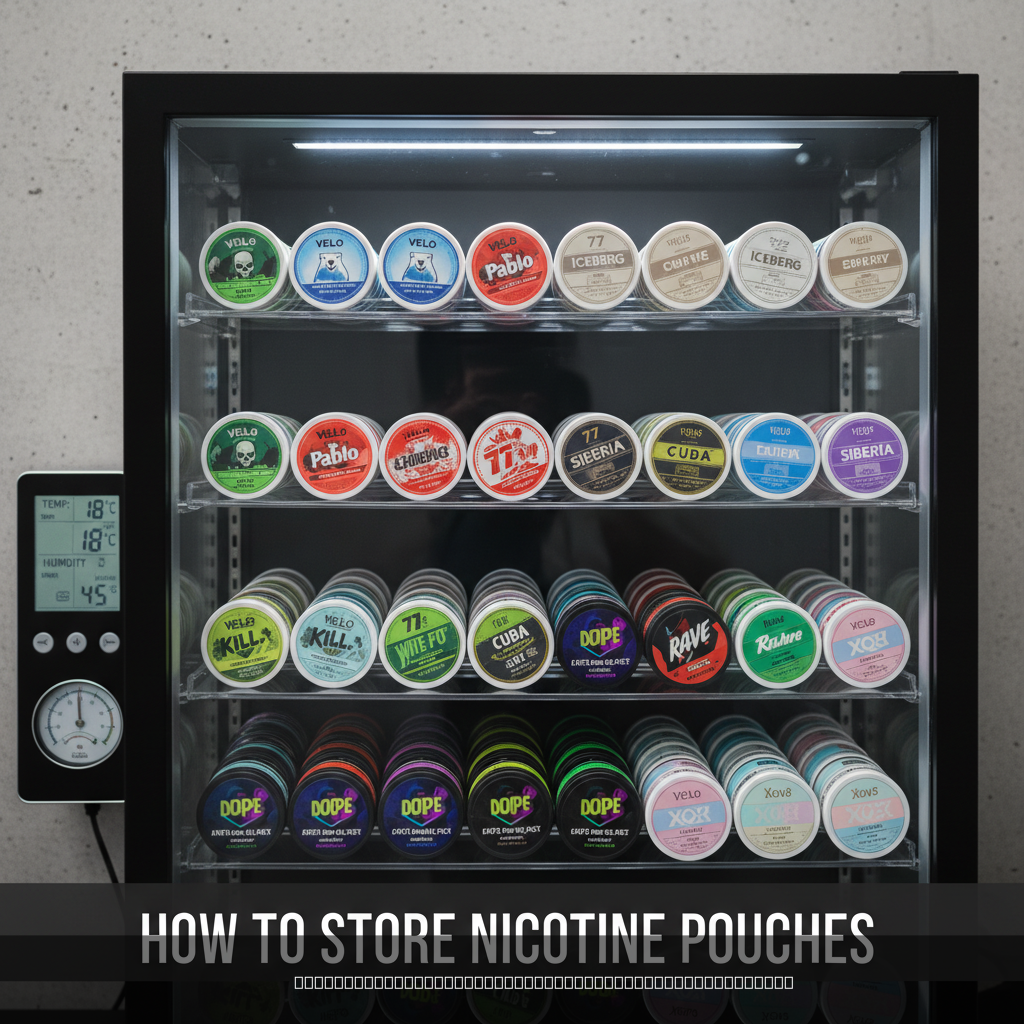
What You'll Need: how to store nicotine pouches
Setting up proper storage for nicotine pouches requires specific equipment and knowledge to maintain product integrity. The right tools prevent moisture loss, temperature fluctuations, and accidental exposure while extending shelf life significantly.Essential Storage Equipment
Your storage setup depends on quantity and usage patterns. For personal use, basic equipment suffices, while bulk storage requires more sophisticated systems.- Original sealed containers (never transfer to other packaging)
- Temperature monitoring device (digital thermometer with min/max readings)
- Humidity gauge or hygrometer (optional but recommended)
- Child-resistant storage cabinet or lockbox
- Inventory tracking system (notebook or digital app)
- Refrigerator space (if choosing cold storage method)
Storage Location Requirements
The ideal storage environment protects against the three main degradation factors: heat, light, and moisture fluctuations. Professional storage facilities maintain these conditions consistently. Key environmental factors include:- Temperature stability between 35-70°F (2-21°C)
- Low humidity levels (ideally below 60%)
- Protection from direct sunlight and artificial light
- Minimal air circulation to prevent moisture loss
- Secure location away from children and pets
Pro Tip: At DarePouch, we store all products in climate-controlled refrigeration units to guarantee maximum freshness. This professional approach extends shelf life by 50-75% compared to room temperature storage.
Step 1: Choose the Right Storage Location
Selecting the optimal storage location is the foundation of effective nicotine pouch preservation. The location determines temperature stability, light exposure, and accessibility while ensuring safety compliance.Evaluating Indoor Storage Options
Different areas of your home offer varying storage conditions. Basements typically provide cool, stable temperatures but may have humidity issues. Bedroom closets offer convenience but can experience temperature fluctuations from heating systems.- Measure temperature variations in potential locations using a min/max thermometer over 48 hours
- Check for direct sunlight exposure at different times of day
- Assess humidity levels, especially in basements or bathrooms
- Ensure the location is inaccessible to children and pets
- Verify adequate space for current and future inventory
- Interior closets on ground floors (stable temperatures)
- Pantries away from heat sources (convenient but protected)
- Dedicated storage cabinets in living areas
- Refrigerator compartments (for extended storage)
Refrigeration Considerations
Refrigerated storage extends shelf life significantly but requires careful implementation. The FDA recommends keeping nicotine products in their original packaging to maintain child resistance [1]. Cold storage slows chemical degradation and moisture loss. Temperature considerations for refrigerated storage:- Maintain consistent 35-40°F (2-4°C) temperature
- Use dedicated compartment to prevent contamination
- Allow pouches to reach room temperature before use
- Protect from freezing, which can alter texture
Pro Tip: Industry research shows refrigerated storage can extend nicotine pouch freshness by up to 18 months compared to 6-12 months at room temperature. This is why commercial retailers like DarePouch invest in professional refrigeration systems.
Step 2: Maintain Proper Temperature Control
Temperature control is critical for preserving nicotine potency and preventing moisture loss. Excessive heat accelerates chemical breakdown, while extreme cold can affect texture and user experience.Optimal Temperature Ranges
Research indicates that nicotine degradation accelerates significantly above 75°F (24°C). The VELO brand specifically recommends keeping pouches away from heat sources to maintain quality [2]. Professional storage facilities maintain temperatures between 35-70°F (2-21°C) for optimal preservation.- Install a digital thermometer with min/max memory function
- Monitor temperature variations for one week before finalizing location
- Identify and eliminate heat sources (heating vents, electronics, windows)
- Create buffer zones using insulation if necessary
- Establish backup storage location for extreme weather conditions
Temperature Monitoring Systems
Consistent monitoring prevents temperature-related degradation. Modern digital thermometers provide alerts when temperatures exceed safe ranges.| Temperature Range | Storage Duration | Quality Impact |
|---|---|---|
| 35-50°F (2-10°C) | 18-24 months | Optimal preservation |
| 50-70°F (10-21°C) | 12-18 months | Good quality retention |
| 70-80°F (21-27°C) | 6-12 months | Gradual degradation |
| Above 80°F (27°C) | 3-6 months | Rapid quality loss |
Step 3: Control Moisture Levels
Moisture control prevents pouches from drying out while avoiding excessive humidity that can promote degradation. Original packaging provides the primary moisture barrier, making container integrity essential.Understanding Moisture Requirements
Nicotine pouches contain specific moisture levels that affect nicotine release and user satisfaction. Excessive drying reduces effectiveness, while too much moisture can cause quality issues. Industry standards recommend maintaining relative humidity between 40-60% in storage areas.- Keep pouches in original sealed containers at all times
- Check container seals for cracks or damage before storage
- Monitor humidity levels using a digital hygrometer
- Use desiccant packs only in bulk storage situations
- Rotate stock to use older products first
Container Management
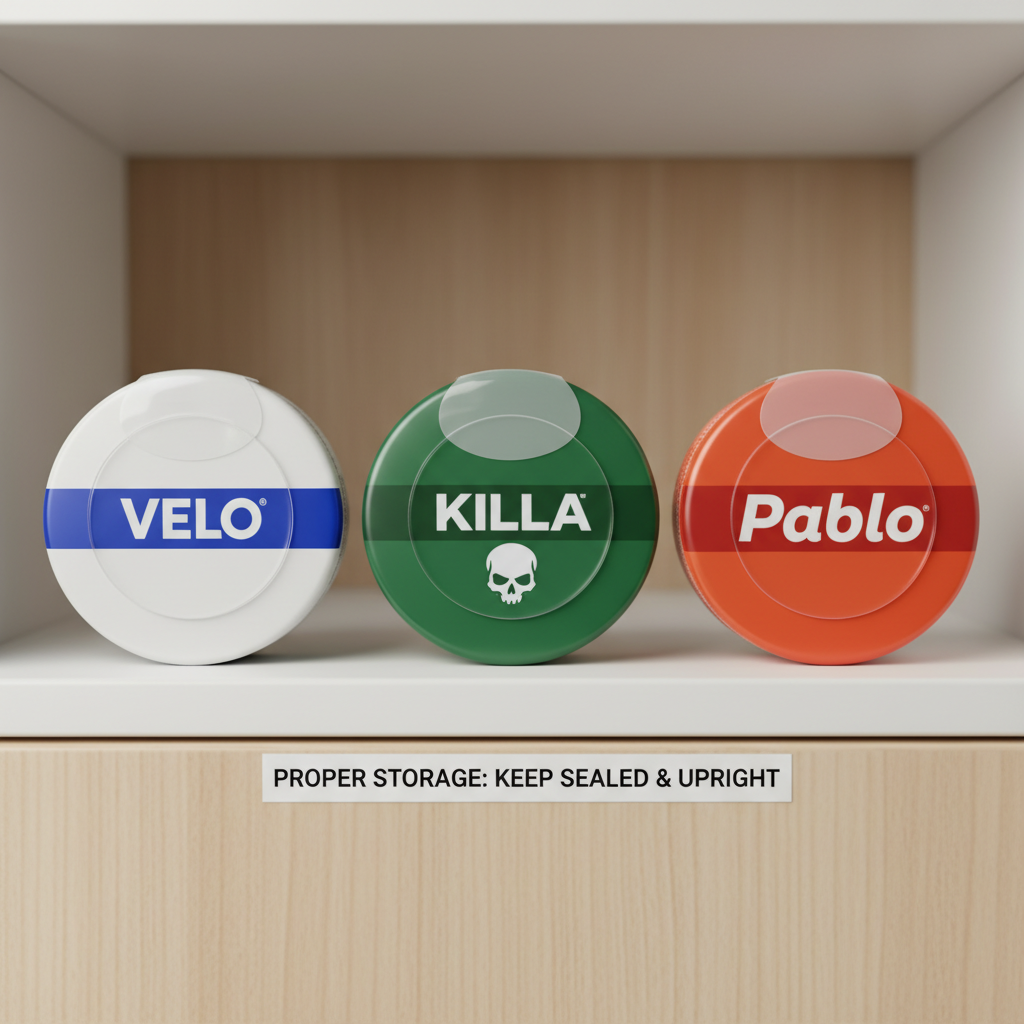
The original packaging provides child-resistant closures and optimal moisture protection. Transferring pouches to other containers compromises both safety and quality [3]. Best practices for container management:- Always reseal containers immediately after use
- Check seal integrity before each storage session
- Replace damaged containers rather than attempting repairs
- Store containers upright to prevent seal stress
- Avoid stacking heavy items on top of containers
Step 4: Organize Your Inventory System
Systematic inventory organization ensures you use products before they degrade while maintaining easy access and safety compliance. Professional inventory management extends overall product life by preventing waste.Rotation and Dating Systems
First-in-first-out (FIFO) rotation prevents products from exceeding optimal storage periods. Dating systems help track purchase dates and expected freshness periods.- Label each container with purchase date using removable stickers
- Calculate expected freshness period based on storage conditions
- Arrange containers with oldest dates in front for easy access
- Create a simple inventory log noting purchase dates and quantities
- Set calendar reminders for inventory rotation every 3 months
Storage Layout Optimization
Efficient layout reduces handling time while maintaining proper storage conditions. Group similar products together and ensure easy access to frequently used items. Organization strategies include:- Separate storage areas by strength levels (light, medium, strong)
- Group by flavor families for easy selection
- Keep travel-size containers in easily accessible locations
- Maintain separate areas for opened and unopened containers
- Reserve premium storage conditions for expensive or rare products
Pro Tip: Commercial operations like DarePouch use sophisticated inventory tracking systems that monitor storage conditions and rotation schedules. For personal use, a simple notebook or smartphone app can achieve similar results.
Step 5: Implement Safety Storage Measures
Safety storage protects children and pets from accidental exposure while ensuring legal compliance. The FDA emphasizes proper storage as critical for preventing accidental ingestion [4].Child-Resistant Storage Solutions
Child-resistant storage goes beyond original packaging to create multiple barriers against accidental access. Professional safety standards require secure storage even when products have child-resistant packaging.- Install a lockable storage cabinet or safe specifically for nicotine products
- Position storage areas at least 5 feet above ground level
- Use secondary locks on refrigerated storage compartments
- Maintain detailed inventory lists to detect any missing products
- Educate household members about storage locations and safety protocols
Emergency Preparedness
Emergency situations require immediate access to product information and poison control resources. The American Academy of Pediatrics recommends having emergency protocols for nicotine exposure incidents [5]. Safety preparation includes:- Keep poison control contact information (1-800-222-1222) easily accessible
- Maintain product information sheets for all stored items
- Store emergency contact lists near storage areas
- Train family members on emergency response procedures
- Keep activated charcoal or other first aid supplies available
Common Mistakes to Avoid
Storage mistakes can dramatically reduce product quality and create safety hazards. Understanding common errors helps prevent costly mistakes and ensures optimal storage results.Temperature-Related Errors
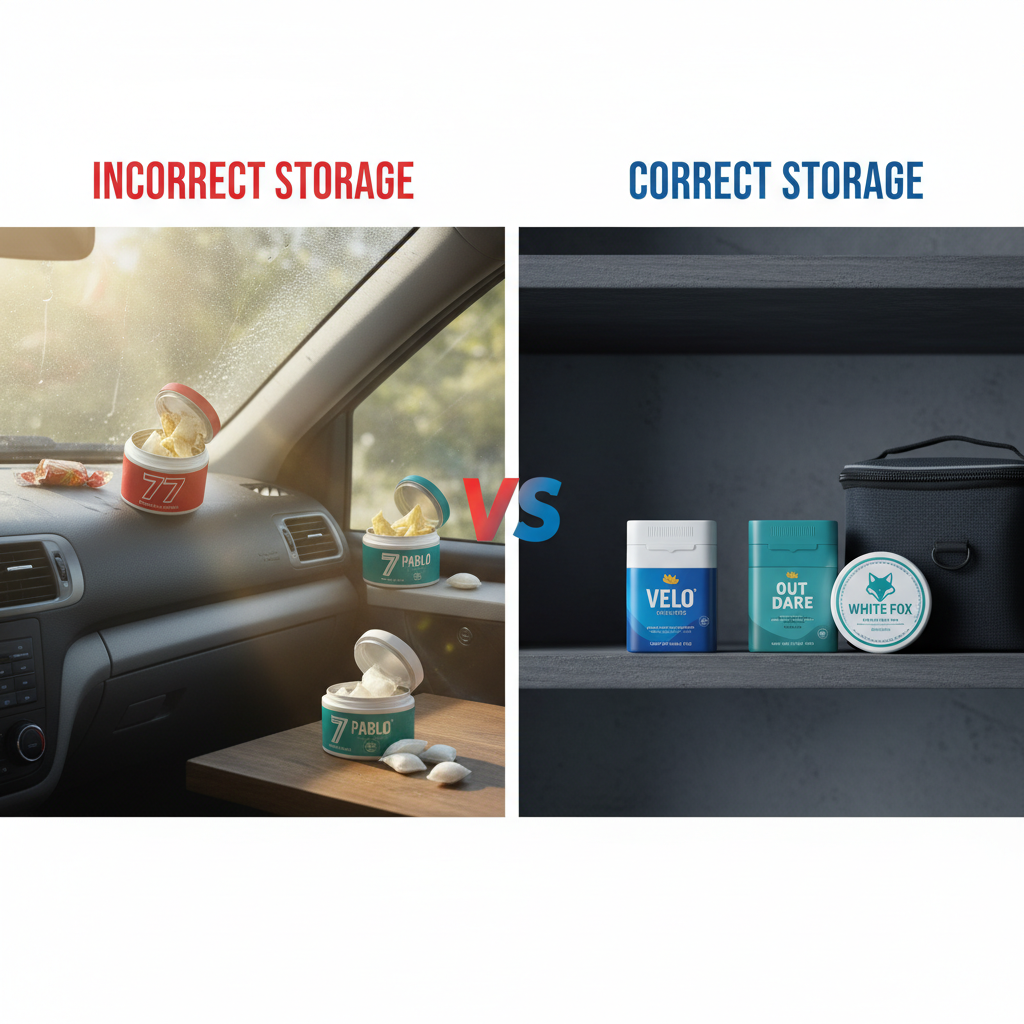
Temperature mistakes are among the most common storage errors. Many users underestimate the impact of temperature fluctuations on product quality. Common temperature mistakes include:- Storing near heat sources (radiators, electronics, windows)
- Using attics or garages with extreme temperature variations
- Placing containers in direct sunlight, even temporarily
- Freezing pouches, which can alter texture and performance
- Ignoring seasonal temperature changes in storage areas
Container and Handling Errors
Improper container management leads to moisture loss and contamination. Original packaging provides optimal protection that's difficult to replicate with alternative containers. Critical container mistakes:- Transferring pouches to non-child-resistant containers
- Leaving containers open for extended periods
- Using damaged containers with compromised seals
- Mixing different products in single containers
- Storing containers in areas with high humidity or moisture
Safety and Legal Oversights
Safety oversights can result in serious consequences, including accidental poisoning and legal liability. Proper safety protocols protect both users and household members. Safety mistakes to avoid:- Storing products in food containers or unmarked packages
- Keeping products in easily accessible locations
- Failing to educate household members about storage locations
- Ignoring local storage regulations and requirements
- Not maintaining emergency contact information
Sources & References
- FDA, "Properly Store Nicotine Pouches to Prevent Accidental Exposure to Children and Pets", 2026
- VELO Switzerland, "How to maintain your nicotine pouch?", 2026
- FRE Pouch, "How to Store FRE Nicotine Pouches for Maximum Freshness", 2026
- Nationwide Children's Hospital, "Nicotine Pouches: What Parents Need to Know", 2024
- American Academy of Pediatrics, "Pediatricians encouraged to discuss dangers of accidental nicotine exposure", 2026
Frequently Asked Questions
1. How to keep nicotine pouches fresh after opening?
Understanding how to store nicotine pouches is essential. Keep opened containers sealed tightly and store in cool, dry locations between 35-70°F. Reseal immediately after each use and avoid exposure to heat, light, and moisture. Refrigerated storage can extend freshness by 6-12 months beyond room temperature storage.
2. Does nicotine need to be refrigerated?
Refrigeration isn't required but significantly extends shelf life. Nicotine pouches can be safely refrigerated at 35-40°F without freezing. Cold storage slows chemical degradation and moisture loss, extending quality retention from 12 months to 18-24 months. This is particularly relevant for how to store nicotine pouches.
3. Can you store nicotine pouches in the freezer?
Freezing isn't recommended as it can alter pouch texture and moisture content. While nicotine remains chemically stable when frozen, the physical properties may change, affecting user experience. Refrigerated storage provides optimal preservation without texture issues.
4. How long do nicotine pouches last once opened?
Properly stored opened pouches maintain quality for 6-12 months at room temperature or 12-18 months when refrigerated. Quality depends on storage conditions, container seal integrity, and environmental factors like humidity and temperature stability. When considering how to store nicotine pouches, this point stands out.
5. What happens if nicotine pouches get too hot?
Excessive heat above 80°F accelerates nicotine degradation and moisture loss. Pouches may become dry, lose flavor intensity, and deliver reduced nicotine levels. Heat exposure can reduce product effectiveness by 20-30% within months.
6. Should nicotine pouches be stored in original containers?
Always keep pouches in original containers, which provide child-resistant closures and optimal moisture protection. Transferring to other containers compromises safety and may violate FDA storage recommendations. Original packaging ensures proper seal integrity and legal compliance. For those exploring how to store nicotine pouches, this matters.
7. How do you know if nicotine pouches have gone bad?
Signs of degradation include dried-out texture, faded colors, reduced flavor intensity, and diminished nicotine sensation. Properly stored pouches rarely spoil but may gradually lose potency. Check for container damage, unusual odors, or significant texture changes.
Recommended Articles
Explore more from our content library:


